 |
 |
 |
|

 Letter to stakeholders
| Currently viewing: CEO'S strategic review / Next: Financial capitals |
|


CEO'S STRATEGIC REVIEW
|
 |
 |
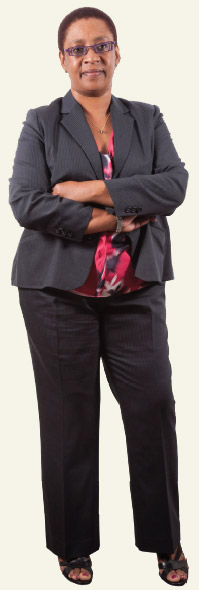
Ditabe Chocho’s CV can be found on page 93 of
the Governance section of this report and on our
website at www.meraferesources.co.za |
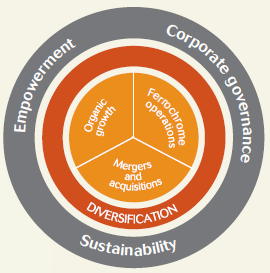
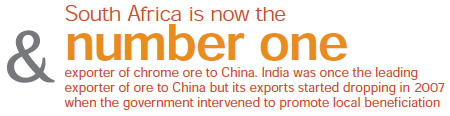
In addition, labour unrest hit the South African mining industry in 2012 with tragic and costly consequences. While the Venture was not immune to this, it nevertheless avoided widespread strikes. Safety There were no fatalities in the Venture’s operations this year and, as you will see in the Human capital section of this report, the Venture’s total recordable injury frequency rate (TRIFR) remained stable in 2012. Strategic review We review our strategic objectives annually and regularly engage with our investors and other affected stakeholders with regard to our strategic objectives. Following our 2012 review we remain firmly committed to our diversification strategy once our financial commitment to Phase II of the Lion ferrochrome plant comes to an end in 2013. Ensuring our ferrochrome interests remain profitable Despite the challenges of lower ferrochrome demand, rising costs driven by higher than inflation increase in electricity tariffs and competitive pressure from China’s developing ferrochrome industry we remained profitable. Again I would refer you to the Financial capital section of this review and the Annual Financial Statements for details of our financial performance. During the year the Venture agreed to participate in Eskom’s electricity buy-back programme, which involved the temporary closing of furnaces at various plants. In return, Eskom bought back the energy not consumed by these furnaces, which was beneficial to all parties. The arrangement did not, however, affect the Venture’s ability to meet its contractual commitments, nor did it result in any job losses. In the interest of keeping the Venture’s costs as low as possible the partners are considering selling certain high cost mining assets. The sale of these assets would not affect the Venture’s supply of chrome ore, as it would have sufficient ore available from its remaining assets. The proceeds from the sale of these assets would accrue to the Venture’s partners in accordance with their participation interests. Challenges China remains the largest purchaser of South African ferrochrome, however, it is now also the largest producer of ferrochrome while South Africa is the number one exporter of chrome ore to China. |
||||||||||||
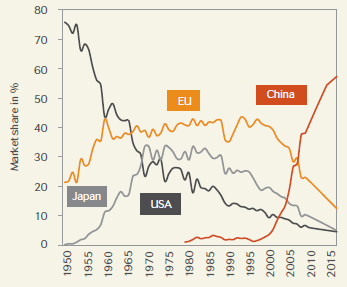
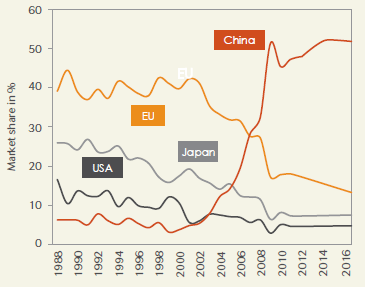
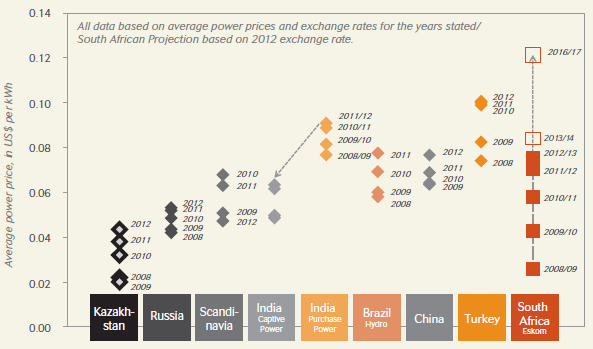
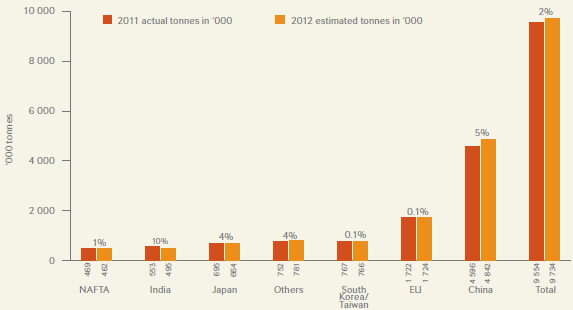
Clearly, the South African ferrochrome industry, which is a major contributor to GDP and jobs in South Africa and has made a major investment in the expansion of its beneficiation capacity, needs to take action to protect its sustainability. The industry continues to engage with government in connection with a number of proposals aimed at limiting the export of unbeneficiated chrome ore from South Africa. The industry’s engagement with government on this issue will continue in 2013. We are also engaging with the relevant authorities with regard to electricity tariff increases, which are a major concern for the Venture and our industry, with Eskom applying for significantly above inflation increases in industrial electricity tariffs over the next five years. As energy prices increase, the Venture’s energy efficiency abilities become ever more key to its sustainability as they enable the Venture to compete globally and retain its position as the lowest-cost producer of ferrochrome in South Africa. Achieving organic growth I am pleased to report that the Venture completed the new 600 000 tonne per annum (tpa) Tswelopele pelletising and sintering plant adjacent to the Rustenburg ferrochrome plant in the last quarter of 2012, which will further increase the Venture’s energy efficiency and reduce costs at its Rustenburg plant. I am also pleased to report that while, heavy rainfall and community unrest affected progress on the civil work for Phase II of the Lion ferrochrome plant in Limpopo province during the first quarter of 2012, the Venture has since made good progress with its construction and the project is on track with the commissioning of the plant expected to take place toward the end of 2013. Lion II, named as a value-adding project by the South African government, will have an annual capacity of 360 000 tonnes, will be the most energy- and costefficient of the Venture’s plants and will increase its production capacity to 2 339 000 tonnes per annum. Chrome ore imports into China
Source of data: Heinz Pariser/February 2013 Diversification Once our financial commitments to Lion II come to an end in 2013, our ferrochrome interests will not require any major investment in the medium term. This will free us up financially to pursue our diversification strategy. Market review* The growth in China’s stainless steel production in 2012 resulted in record global production of 35.2 million tonnes compared with 34.1 million tonnes in 2011, a 3.2% increase year-on-year. Global demand for ferrochrome also increased year-on-year, to 9.7 million tonnes in 2012, from 9.5 million tonnes in 2011, while global ferrochrome production increased to 9.3 million tonnes in 2012 compared with 9.2 million tonnes in 2011. |
|
See the Operating context section of this
report for more information on South
Africa’s ferrochrome industry |
Source of data: Heinz Pariser/February 2013
Ferrochrome production and demand South African ferrochrome production declined 9% year-on-year with the agreements South African producers reached with Eskom to sell back electricity that they would have used in their furnaces impacting on production levels. During the year increased demand and reduced supply resulted in the drawing down of global ferrochrome stocks. While China increased its production of ferrochrome by 19% year-on-year to 3.3 million tonnes, facilitated by the increased availability of chrome ore from South Africa, it remains a net importer of ferrochrome, importing 1.5 million tonnes in 2012. A number of global issues, including the debt crisis in the Eurozone, economic woes in the United States and other geopolitical events, such as the change of leadership in the Communist Party of China, resulted in weaker market conditions which affected ferrochrome demand in the second half of 2012. Chrome ore Chinese chrome ore imports decreased from 9.4 million tonnes to 9.3 million tonnes in 2012, however, Chinese demand for chrome ore, driven by the increase in ferrochrome production, increased year-on-year. The excess required to meet this increase came from the drawdown of Chinese port stocks of chrome ore. In 2012 South Africa supplied around 48% of the chrome ore imported into China, a 4% decrease on 2011 record volumes. These exports of chrome ore continue to advance the development of the ferrochrome industry in China, displacing capacity in South Africa and undermining South African sales of beneficiated chrome ore in the form of ferrochrome. |
Our growth in ferrochrome since 2002
|



|
|


Future outlook While we recognise that the ferrochrome industry faces challenges we remain optimistic about the future sustainability of our business, particularly as the annual growth rate for stainless steel is expected to be 5% in the long term. The Venture’s advantage of being one of the lowest-cost and more energy-efficient producers of ferrochrome will be enhanced in 2013 by the addition of Lion II, which will contribute to the Venture’s future sustainability. We are, however, concerned that this advantage could be further eroded by the substantial increase in electricity costs proposed by Eskom. Further demands for wage increases could also contribute to cost challenges. At the ANC’s recent conference at Mangaung it again confirmed that nationalisation of the mining industry is no longer on its agenda. However, some sort of mining tax remains a possibility. The Venture, along with all South African ferrochrome producers, is committed to continuing to engage with the government with the aim of protecting South Africa’s chrome ore resources and an industry deeply committed to the government’s beneficiation strategy. The Glencore Xstrata merger looks likely to go ahead during 2013, having received shareholder approval. Merafe has a longstanding relationship with Glencore who have always been responsible for the marketing of the Venture’s ferrochrome and chrome ore and we look forward to further engagement with our new partners in the Venture. We continue to have the advantage of a strong balance sheet, low gearing and a healthy cash flow and as I have already confirmed we will be investigating opportunities for Merafe to diversify with renewed vigour during 2013. Merafe’s empowerment credentials, which exceed the Mining Charter’s requirements, and which earned us the rating of most empowered company in the South African resources sector in the Financial Mail’s Top Empowerment Companies 2012 survey, also support our future diversification strategy. The Venture is also well-positioned in terms of the remaining Mining Charter targets, many of which it has already exceeded. Its sustainability in terms of its access to reserves (see the Mineral Reserves and Resources section of this report on pages 50 to 61) is also assured.
In conclusion My thanks to our board for their confidence in my ability to lead Merafe and for their support and commitment during the year. I would also like to thank the Merafe team for their commitment during a challenging year. The Venture had a change in its Chief Executive Officer with the retirement of Peet Nienaber, in September 2012 who played a significant role in the Venture from its formation in 2004. Loutjie Smit, who has been a non-executive director of Xstrata South Africa for some time, took over as Acting Chief Executive Officer. My thanks also go to our partners, Xstrata, and the management, employees and contractors of the Xstrata-Merafe Chrome Venture for working safely and profitably in a difficult year. Zanele Matlala |

| ICONS USED IN THIS REPORT | DOWNLOADS | |||||||
 |
|